Throughout the DACH region · German or English · Available for in-house training on an ongoing basis

AI Developer Bootcamp:
Agentic Coding for development teams

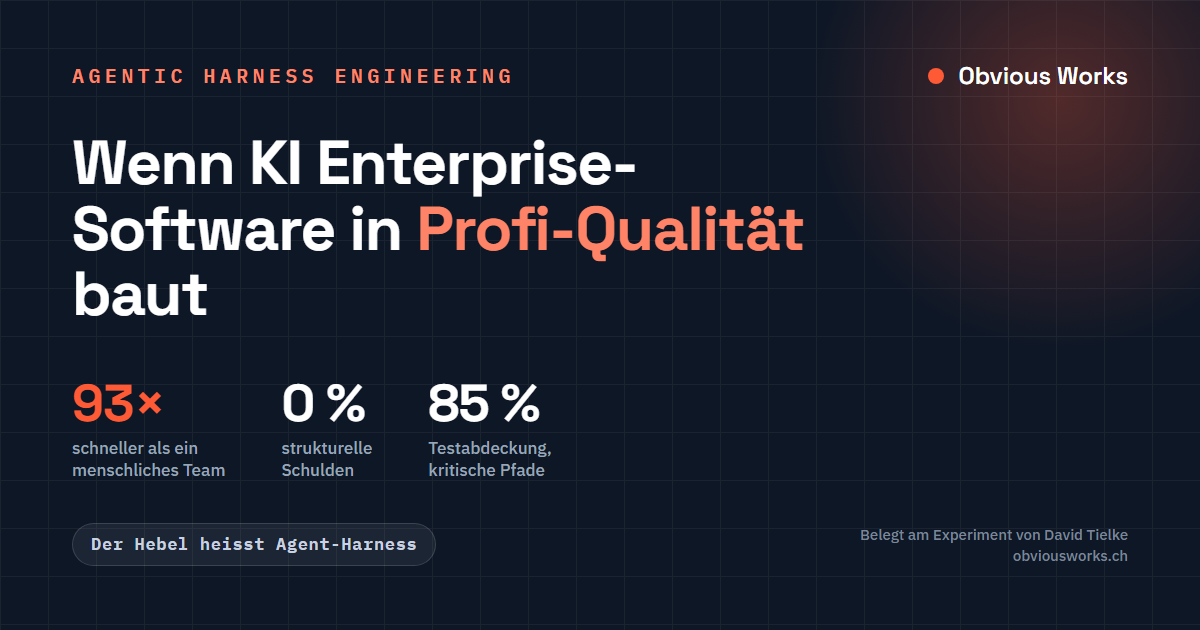
After three months, your team will have developed Measurably Faster with AI: reliable, reproducible, and independent of any specific tool. Developers become Agentic Software Engineers, who delegate entire tasks to agents instead of typing snippets.

  • 3 months instead of 3 days. Behavior changes, not just knowledge.
  • Max. 12 participants per cohort. Every use case counts.
  • Your actual codebase. No toy projects, no fake demos.
  • Tool-agnostic: Claude Code, Cursor, Copilot, Codex, Windsurf, MCP.

Has trained teams at PostFinance, AKROS, Interism, Kern AG, and other companies. Over 5,000 trained professionals, 400+ Trained developers. Participating teams report in our surveys 1.8 to 3 times faster development.

„Whereas it used to take us six months, we can now do it in less than a month with AI—with greater coverage and fewer errors.“Kai B., Bootcamp Participant
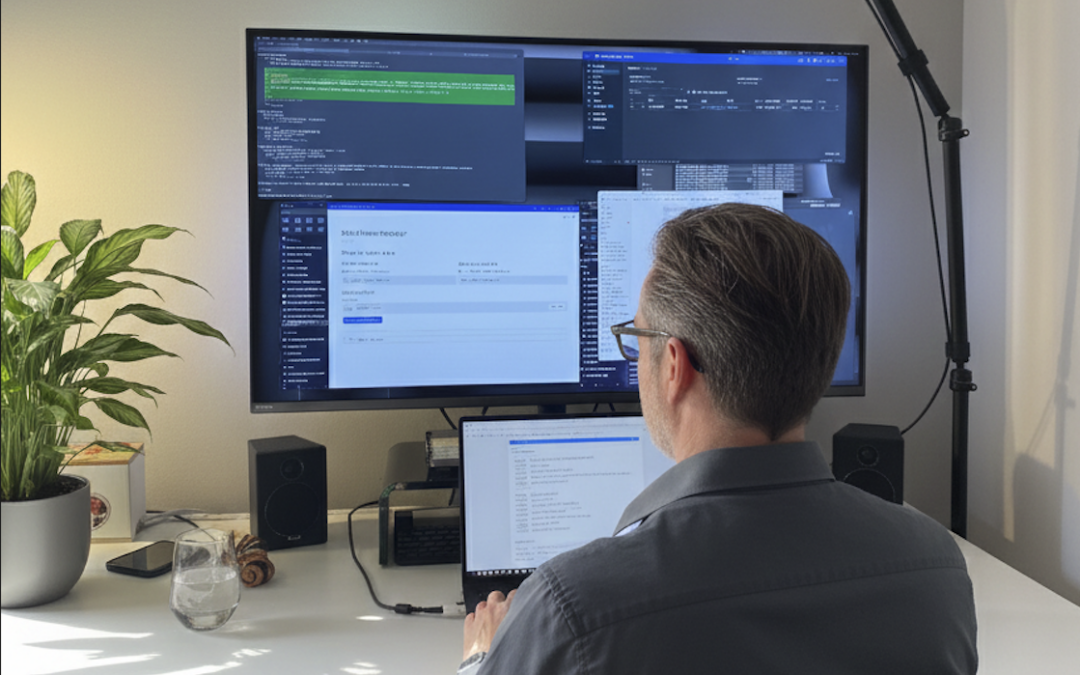
A developer is working on code on a laptop screen
Duration
3 months · max. 12

Already in use by · over 5,000 trained professionals

Overview

The Bootcamp at a Glance

Agentic Coding means that autonomous AI agents plan, write, and test code on their own, while your team acts as architects and reviewers. In three months, this bootcamp will equip your team to work on your actual codebase. Agentic Coding in Detail →

OutcomeAgentic Software Engineering: Your team delivers independently using agents—securely and reproducibly.
🎯
For whom
Development teams (5 to 12 developers), CTOs, and team leads
⏱️
Duration & Effort
3 months · about 42 hours (approx. 5 days); can be done alongside a job
🏷️
Price
CHF 6,990 · Early Bird CHF 6,291 · In-house training available upon request
👥
Cohort
Max. 12 participants
💻
Format
Blended (in-person, live online, self-study), 80 % hands-on
📍
Location
Remote or hybrid (open) · On-site throughout the DACH region
🗣️
Language
German or English
Prerequisites
Your team: strong coding skills and familiarity with Git/GitHub
📜
Certificate
Obvious Works Agentic Coding Certificate
🗓️
Next Start
Ongoing in-house program · Open cohort via waiting list
01: Learning Objectives

What will your team be able to do after the boot camp?

After three months, your team will have observable, verifiable competencies, not just knowledge. You'll then master these four areas of expertise as you apply them to your actual codebase:

After the boot camp, your team can
  • Develop features entirely with agents, not just have it suggest snippets
  • Build your own MCP servers and skills and share as a team
  • Migrate existing systems to AI and make legacy code accessible
  • Deploying Agents Effectively and Productively (Security by Design, Governance)
  • Define AI Standards for the Entire Company (Team Playbook)
🧠
Area of Expertise 1

Context & Control

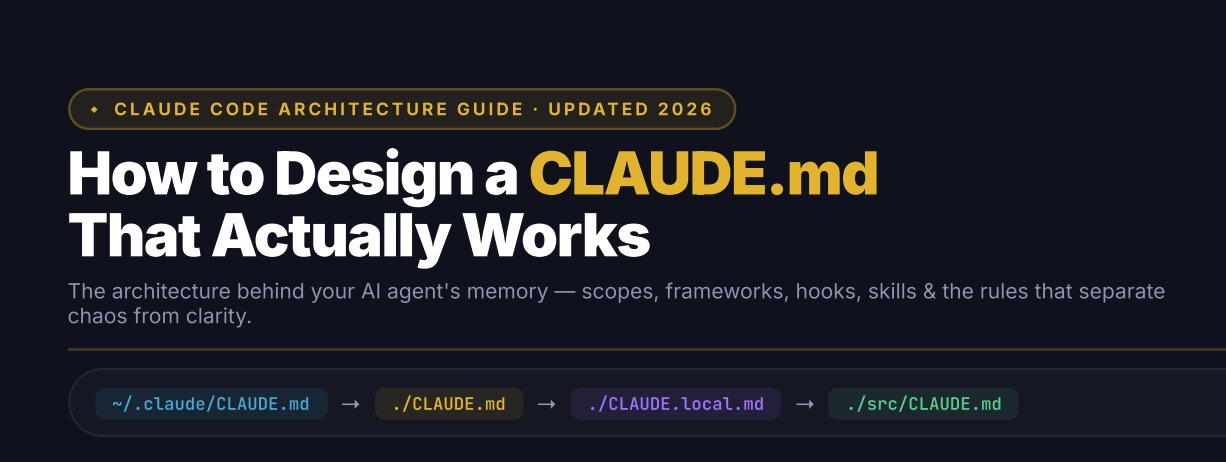
  • designed and implemented Project-specific AGENTS.md and CLAUDE.md files that reliably control coding agents
  • analyzed and optimized the context window (progressive disclosure, memory) for stable, reproducible results
🛠️
Area of Expertise 2

Build & Expand Agents

  • developed its own skills (SKILL.md pattern), MCP servers, and tools, and deploys them securely
  • automated Recurring development tasks using agents instead of individual snippets
  • implemented Hooks (PreToolUse, PostToolUse) as deterministic guardrails
🎯
Area of Expertise 3

Specifications & Quality

  • orchestrated Spec-Driven Development: From User Story to Merged PR
  • designs and validates Eval suites and practices eval-driven development
⚙️
Area of Expertise 4

Orchestration & Operations

  • orchestrated and scaled Multi-Agent Workflows Using Git Worktrees and Subagents
  • evaluates and avoids The Lethal Trifecta from a structural perspective (Security by Design)
  • integrated Tools across different platforms (Claude, Cursor, Copilot, Codex) and optimized Tokens, Costs, and Eval Pass Rate as KPIs
Transformation

From Copilot User to Agent Harness Engineer

People buy transformation, not content. Here's exactly how that will change your team:

BeforeAfterwards
ChatGPT for Individual SnippetsAutonomous Development Workflows
Individual, unpredictable promptsReproducible Agent Systems
Occasional use of toolsAn Integrated Engineering System
Copilot usersAgent Harness Engineer
02: Target Audience

Who is this boot camp ideal for?

This boot camp is ideal if you recognize yourself in the following:

Your developers are already using Claude, Cursor, or Copilot
Everyone prompts differently; there is no common standard.
The quality and reliability of AI results vary widely
You want to establish binding standards and safeguards
You want to scale AI company-wide, not just experiment with it on an individual basis
These roles get the most out of you
👩‍💻
Software Developer
🧑‍🔬
Senior Developer
🏗️
Software Architects
🧭
Tech Leads
📊
Engineering Manager
🏢
CTOs
👥
Development teams
🚀
AI Champions

Who This Isn't For

  • For anyone who wants to give AI a try without changing their daily work routine
  • If you don't have a basic understanding of programming, this isn't a beginner's coding course
  • If you're looking for a one-day event, the Agentic Coding Hackathon is a better fit.
  • For those who don't want to work on the actual codebase, but only on demos
  • Companies without active software development
  • Teams with less than 20 percent of the development workload
  • For those who just want to learn prompt engineering
03: Prerequisites

Prerequisites

To ensure your team is productive from day one, each participant should bring:

Using Git Safely
Strong programming skills in at least one modern programming language
Work experience as a developer
Willingness to use AI in daily work
Laptop with administrator privileges (for installing the CLI tools)

No prior knowledge of AI or agents is required—we'll build that up with you from the ground up during the bootcamp.

04: Curriculum

9 modules based on the eight pillars

80 % Hands-on on your actual codebase, 20 % structured input. Each module ends with a deliverable artifact (AGENTS.md, skill, MCP server, hook, eval suite, etc.). The nine modules follow the eight pillars of an agent harness: Context, Tools, Skills, Memory, Verification, Orchestration, Security, and Observability.

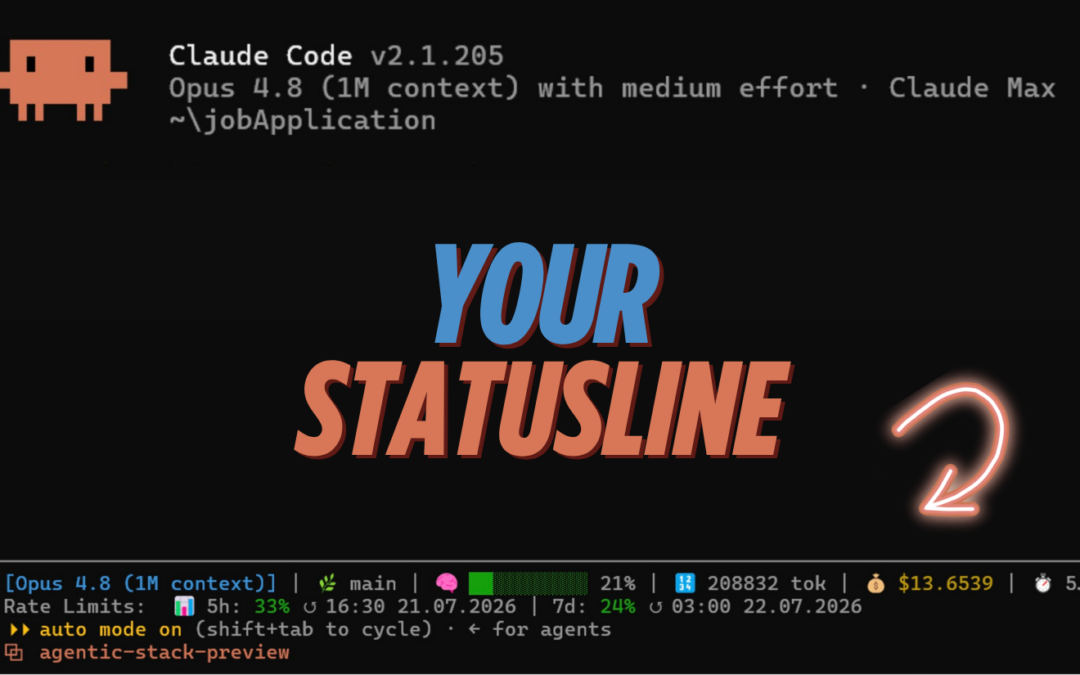
Claude Code Terminal with /context: Context Window Budget, Skills, and MCP Tools at a Glance
Live from the bootcamp: Claude Code controls Context Window, Skills, and MCP Tools—that's exactly what your team is practicing on your actual codebase.
The Journey in Three Phases
Phase 1Developer → AI Developer
1
Context Engineering
Pillar 1
2
Tools & MCP
Pillar 2
Phase 2AI Developer → Agentic Developer
3
Skills
Pillar 3
4
Spec-Driven Development & Memory
Pillar 4
5
Verification, Evaluations, and TAIDD
Pillar 5
6
Multi-Agent Orchestration
Pillar 6
Phase 3Agentic Developer → Agentic Team
7
Security & Hooks
Pillar 7
8
Observability & Scalability
Pillar 8
9
Transfer & Retrospective
Conclusion
80 % Hands-on · Pairing on Your Actual Codebase
0

Kick-Off: From Horse to Coachman

  • Mindset Shift: Why „Repairing the Harness“ Is the New Main Job
  • Tool Landscape 2026: An Overview of Methodologies
  • Setup Day: IDE, Claude Code CLI, Codex CLI, Cursor, Copilot, MCP Clients
  • First Hands-On: A bug fixed autonomously by the agent, verified by you
View all modules in detail, including deliverables and exercises+
1

Context Engineering

Pillar 1
  • The Context Window as a Scarce Resource (Context Red, „Lost in the Middle“)
  • Progressive Disclosure as the Key Solution
  • AGENTS.md / CLAUDE.md design properly
  • File System as Long-Term Memory, Compaction, Clearing Tool Results
  • Deliverable: Your first AGENTS.md file for your codebase
2

Tools & Model Context Protocol (MCP)

Pillar 2
  • MCP as „USB-C for AI,“ Standardization, Ecosystem
  • Tool Design: idempotent, narrow, well-typed, observable
  • Tool Loadout Instead of Server Sprawl
  • Building Your Own MCP Servers (Python & TypeScript)
  • Deliverable: Your own MCP server for a use case from your backlog
3

Skills and Capabilities as Progressive Disclosure

Pillar 3
  • SKILL.md Pattern: Frontmatter → Body → Linked Files
  • When to use Skill, when to use MCP, and when to use a custom tool?
  • Composition, Versioning, Plugin Marketplaces
  • Security: Skills Only from Trusted Sources
  • Deliverable: A skill actively used in your team library
4

Spec-Driven Development & Memory

Pillar 4
  • Specs as a durable source artifact (not throwaway)
  • GitHub Spec Kit Workflow: constitution → specify → plan → tasks → implement
  • Alternatives: BMAD, Amazon Kiro
  • Memory-MCPs, Knowledge Graphs, GraphRAG
  • Deliverable: A feature implemented independently from the spec to the merged PR
5

Verification, Evaluations, and TAIDD

Pillar 5
  • Hamel Husain Methodology: Error Analysis, then Evaluations, then LLM-as-Judge
  • Code-based evaluations first (regex, assertions, structural checks)
  • Binary Pass/Fail Instead of a 1-to-5 Scale
  • Test-AI-Driven Development (TAIDD) as a Workflow
  • Deliverable: An evaluation suite for your most important agent pattern
6

Multi-Agent Orchestration

Pillar 6
  • Orchestrator-Worker Pattern
  • Git Worktrees as the Foundation for Parallel Agents
  • Subagents, Context Isolation, tmux Setups
  • When to Use Multi-Agent, When to Use Single-Agent? Asynchronous Background Agents
  • Deliverable: Three parallel agents that collaboratively deliver a feature
7

Security & Hooks

Pillar 7
  • Simon Willison's "Lethal Trifecta": Avoid it structurally; don't filter it
  • Sandbox, Container, Approvals, Permission Gates
  • Hooks as a deterministic layer (PreToolUse, PostToolUse …)
  • Hook Audit, Secret Detection, Supply Chain Risk for Skills/MCPs
  • Deliverable: Hook Suite + Lethal Trifecta Audit for Your Setup
8

Observability & Scalability

Pillar 8
  • Token, Latency, Cost per Task, and Eval Pass Rate as KPIs
  • Skill Evolution: Survival of the Fittest at the Capability Level
  • Failure Mode Catalogs, Evaluation Trend Tracking
  • Scaling: 1 → 3 → orchestrated. Human-in-the-loop checkpoints
  • Deliverable: Observability Dashboard for Your Harness
9

Transfer & Retrospective

  • Use-Case Retros every 2 weeks (mandatory)
  • AI consultation hours, open to all, one-on-one or in a group
  • Your own final project with feedback from a coach
  • Team Playbook: Your Harness, Your Rules, Your Evaluations as a Company-Wide Asset
05: Format

Format · Scope · Methodology

A developer is working on agent-based coding workflows in a code editor
Duration
3 months
Total cost
Approx. 42 hours (about 5 days), spread over 12 weeks
Format
Blended Learning, In-Person · Live Online · Self-Study
Cohort size
Max. 12 participants (open cohort and in-house)
Language
In German or English—we've already completed the boot camp several times conducted in English (Some materials are in English)
Location & Region
Open cohort: remote or hybrid · In-person on-site throughout the DACH region (Germany, Austria, Switzerland), remote, or hybrid
Certificate
Obvious Works Agentic Coding Certificate
Payment
Credit Card · PayPal · Invoice
06: Voices

What Participants Say

„Precisely because we were able to overcome initial skepticism within the team, the AI bootcamp was such a huge success for us—one that has already led to noticeable performance improvements. The seamless integration of AI coding assistants directly into our development environment was a real milestone that has significantly increased our problem-solving speed. In particular, the insights into MCPs have opened our eyes to future potential and optimally prepared our developers for the next level of agentic coding. We can clearly see how all employees are now using the new tools with confidence and ease.“Decision-makers from the leadership team, industrial companies (Germany)
„I used to just ask AI questions; now I build agent-based systems. The bootcamp was the in-depth course I needed to learn modern coding.“
Christian, Interism AG
„Thanks to the weekly assignments and the in-depth discussions, AI has evolved from a field of experimentation into an integral part of my daily work routine, resulting in a clear increase in productivity.“
Simon, Kern AG
„At first, I was skeptical about whether a bootcamp could bridge the gap between theory and real-world practice. The AI Developer Bootcamp pleasantly surprised me: it was hands-on, clearly structured, and focused on agent-based thinking. That has had a lasting impact on my daily work.“
Achraf, PostFinance AG
„A comprehensive overview of AI expertise: The training covers the cutting edge of the technology, from reverse engineering to vibe coding.“
Adrian, AKROS AG
„Coding using agents was my biggest “aha’ moment. The agent works iteratively; code is built, tested, and revised multiple times.”
Kim, Bootcamp Participant
„While debugging a customer's problem, Claude was able to find the error in the customer's DLL—something that would normally have required a trip to the customer's site.“
Sven, Bootcamp Participant
„Unbelievable. He created the building blocks for me in just a few minutes. It would have taken me forever to do it by hand.“
Bootcamp participants
A Reference on Equal Footing

Want to hear it firsthand? We'd be happy to set you up with a conversation with decision-makers who have booked the bootcamp and gone through it with their teams.

Request a Reference
07: Comparison

Bootcamp, workshop, or self-study: which option is right for your team?

View Detailed Comparison: Bootcamp vs. 2-Day Workshop vs. Self-Study+
Criterion Obvious Works Bootcamp 2-Day Workshop Self-Study
Duration3-Month Blended Program2 days of in-person training4 to 12 weeks, at your own pace
Methodological Depth (8 Pillars)✓ All 8, each with hands-on practice⚠ Usually just Context + Tools✗ Rarely all
Application to Real Code✓ Your codebase✗ Demo Projects✗ Tutorials
Tool Coverage✓ Claude · Cursor · Copilot · Codex · MCP⚠ Usually 1 tooldifferent
Cohort learning effect✓ Max. 12, Retros every 2 weeks⚠ 20 to 30, anonymous✗ Alone
Evaluation-Driven Development✓ Built our own evaluation suite✗ Just mentioned✗ Rare
Security (Lethal Trifecta)✓ Architecture Workshop✗ Rare✗ Rare
Follow-up After the Presentation✓ AI consultation hours every 2 weeks✗ None✗ None
Price (per participant)CHF 6,990 · In-house, customizedstarting at CHF 1,500CHF 0 to 200

Bottom Line: If your goal is „Let's play with Claude Code“ ...a workshop is enough. If your goal is „Our team delivers results 2× faster in 6 months while maintaining the same quality.“ ...it'll take you weeks, not days.

Business Case

Is it worth it?

A quick sample calculation per developer. Even a small, more durable The productivity gains far exceed the one-time investment.

Total Cost per Developer
CHF 120,000
per year (estimate)
+5 % Productivity
CHF 6,000
saved per year
+10 % Productivity
CHF 12,000
saved per year
+20 % Productivity
CHF 24,000
saved per year

The boot camp costs a one-time fee of CHF 6,990 per participant. Already around 6 %: Sustainable Productivity Gains per developer covers that in the first year; after that, the profit continues to grow each year. Participating teams even report in our surveys that 1.8 to 3 times faster development.

Sample calculation based on an assumed total cost of CHF 120,000 per developer per year. The actual impact depends on the team, the codebase, and the use case.

08: Prices & Waiting List

Prices & Waiting List

Open cohort

CHF 6,990

Regular price per participant

Early Bird 10 % Discount: The first four bookings pay CHF 6,291
Allocation instead of deadline, while supplies last.
  • 3 months of blended learning
  • Max. 12 participants
  • Remote or hybrid
  • AI Consultation Hours Every Two Weeks
  • Certificate included
🎟 Book a boot camp Or join the waiting list
Most Often Booked by Teams

In-house for Your Team

Upon request

Customized, max. 12 participants

  • A curriculum tailored to your codebase
  • Up to 12 participants
  • In-person or hybrid
  • Team Playbook at the End
  • NDA Standard
Start an In-House Inquiry

There are currently no open dates listed. The next open cohort will be filled from the waiting list—sign up, and you'll be the first to know the date and your early-bird allocation. In-house It is available on an ongoing basis and can be booked flexibly.

09: In-house

A boot camp tailored to your team

If you want to help 6 or more developers advance their careers, in-house training is the right choice. We’ll take a look at your codebase, identify the most problematic areas (legacy migration, testing gaps, documentation debt), and tailor the bootcamp accordingly. The result: a team playbook that embeds the new workflows.

Start an in-house inquiry →
  • 🎯Use Cases from Your Actual Backlog
  • 🔒Your codebase remains with you (standard NDA) · Option to use local LLMs (Ollama, Deepseek)
  • 👥Up to 12 participants per cohort
  • 📍At your location or in a hybrid format
  • 📝Team Playbook + Templates at the End
10: Your Coaches

What we teach, we do every day

Led by Matthias Herbert (Lead Trainer). Both trainers work weekly Working on real client projects with Claude Code, Cursor, Codex, and Copilot.

Matthias Herbert

Matthias Herbert

Head of AI & Agentic Coding · Co-author of the IREB AI4RE Study Guide

Matthias has 25 years of IT experience and 20 years of software development experience. Today, he bridges the gap between requirements engineering and agentic practice: He develops the AI Developer Bootcamp, the Agentic Coding Hackathon, and the AI Masterclass, and works daily with Claude Code, Codex, Cursor, and Windsurf on real-world client projects.

  • Co-author of the IREB AI4RE Study Guide, Co-Founder of the IREB SIG #AIREB
  • IREB CPRE & Certified Agile Requirements Specialist (CARS)
  • Member of the swissAI Association
  • Guest Lecture at the University of Bern: „From Software Engineering to Agentic Harness Engineering“
  • Speaker at RE Conf 2025/2026 in Munich, Business Analysis Day, ZHAW (CAS), DOAG VOICES Podcast

LinkedIn · GitHub · Profile

Michael Mey

Michael Mey

Co-Founder of Obvious Works · Trainer at Agentic Coding

Michael was there from the very beginning when Anthropic released Claude Code, and he has the CLAUDE.md Architecture Pattern which has helped shape the discourse and is frequently cited within the community. His content on Claude Code and agent-based workflows ranks prominently in the DACH region.

LinkedIn · Claude Code Experience · Blog

11: FAQ

Frequently Asked Questions

Is this a Claude Code training session?+

Yes, Claude Code is one of the three core agents and is covered in depth (CLAUDE.md, subagents, hooks, skills, slash commands, MCP). Unlike a standard one- to two-day Claude Code training course, the bootcamp is a 3-month program in which you’ll use Claude Code productively on your actual codebase, supplemented by Cursor, Copilot, and Codex in a tool-agnostic manner.

Which tools are covered in the bootcamp?+

We take a tool-agnostic approach and provide in-depth coverage of the leading coding agents: Claude Code (Anthropic), OpenAI Codex CLI, Cursor, and GitHub Copilot Agent Mode. In addition: Cline, Aider, Continue, Windsurf, Gemini CLI, as well as MCP, AGENTS.md, local LLMs (Ollama, Deepseek), and spec-driven frameworks (GitHub Spec Kit, BMAD).

Why 3 months instead of a 2-day workshop?+

Workshops impart knowledge; boot camps build habits. About 70 % of all workshop content is forgotten after 6 weeks if no application phases follow. Our bootcamp consists of 80% hands-on work on your own codebase and 20% input, spread over 12 weeks with two-week use-case sprints and mandatory retrospectives.

How much time will this really take?+

About 42 hours over 12 weeks, broken down into regular blocks and short mini-tasks. Deliberately designed to be manageable alongside day-to-day work.

Can I book the boot camp as an in-house program?+

Yes. In-house training for groups of 6 or more participants, customized to your tech stack, codebase, and roadmap. We develop the use cases with your tech leads, integrate your CI/CD stack, and provide a team playbook. We tailor the price to your specific needs, depending on team size (6 to 12 participants), scope, and setup.

What qualifications do I need?+

Solid coding skills in a modern programming language (Python, JavaScript/TypeScript, Go, Java, C#) and familiarity with Git/GitHub. Some experience with ChatGPT or Claude is helpful, but not a strict requirement.

Is there a certificate?+

Yes, the „Obvious Works Agentic Coding Certificate“ upon successful completion, including a use-case project. The content has been approved by our client companies.

Ready for the transformation?

Three months. A maximum of 12 participants. Your actual codebase. A team that works differently after the bootcamp—not just thinks differently.

Book a 30-minute consultation. Together, we’ll determine whether the bootcamp is a good fit for your setup—honestly and without any sales pressure. If you’d like, we can put you in touch with a decision-maker who has already gone through the program with their team.